New product launch comming soon...

Nikon D7000 in 2026
Does a 2011 DSLR still have a place in 2026? I dusted off my Nikon D7000 to test its limits against modern standards. The result wasn't just a surprise—it was a lesson in why ergonomics and patience often matter more than megapixels.
Siby Koshy
1/23/20264 min read
By 2026, the photography landscape has shifted entirely to mirrorless systems, driven even further by AI autofocus and computational photography. While my primary shooter, the Fujifilm X-T3, is technically "modern" compared to where I started, even it is beginning to show its age in this fast-moving tech world.
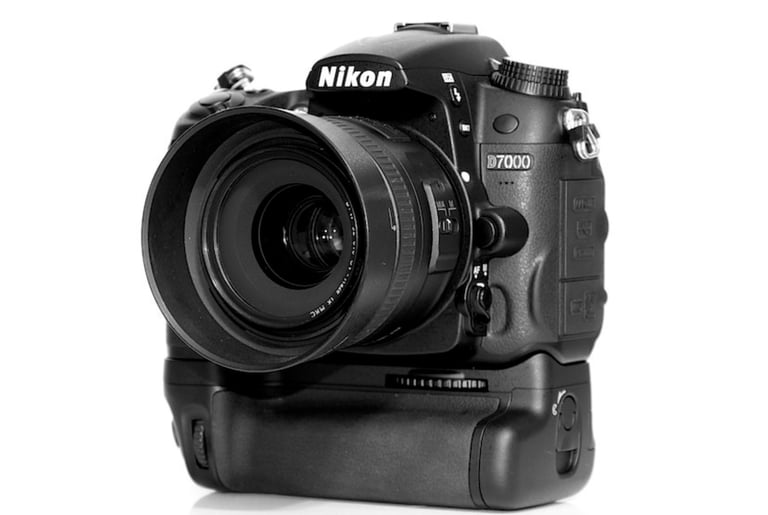
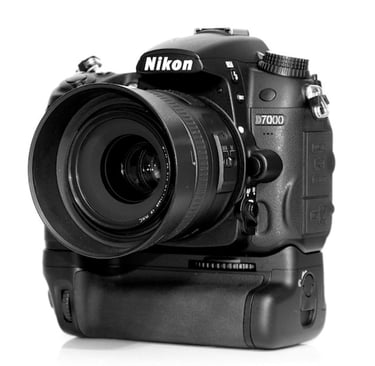
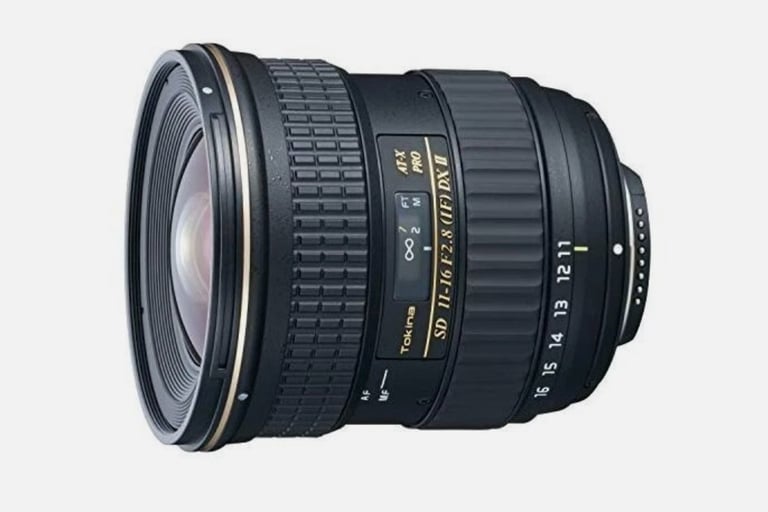
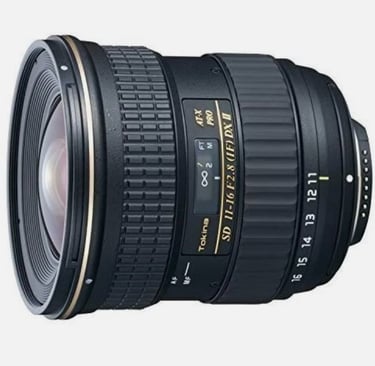
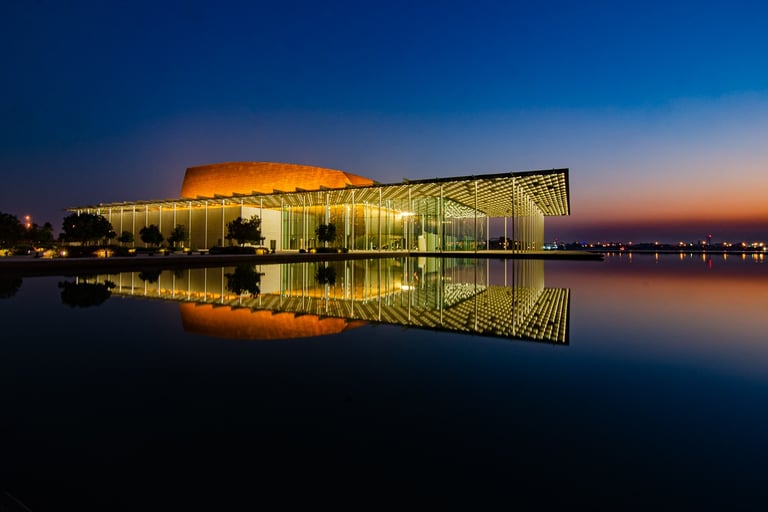
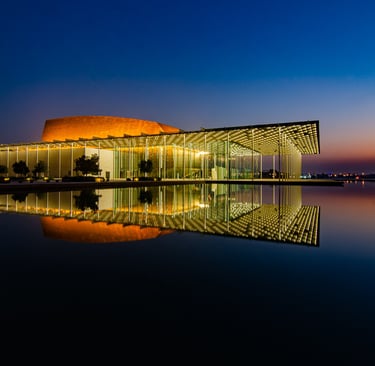
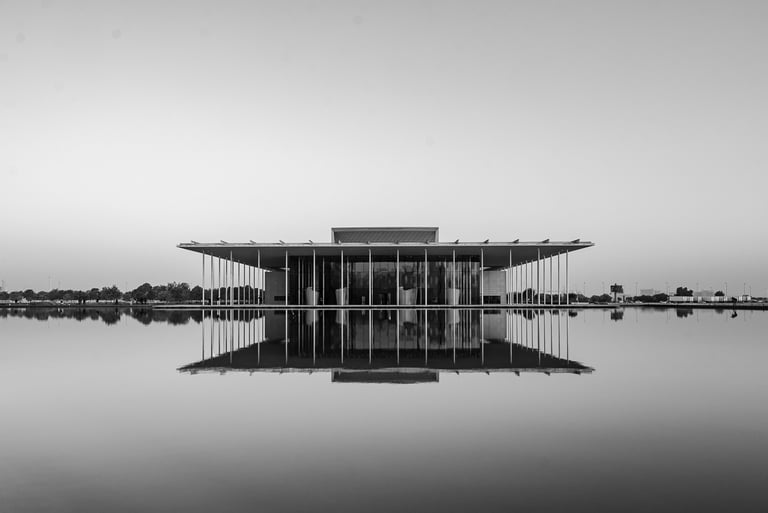
Recently, I had the opportunity to photograph an architectural project. To ensure I could capture the entire structure in a single frame, I bypassed my newer gear in favor of my trusted Tokina 11-16mm F2.8 lens paired with my Nikon D7000—a camera I have owned since 2011. I had not deployed this camera for a serious shoot since acquiring the X-T3 in 2022, though I maintained a strict regimen of cleaning, servicing, and periodic charging.
The real surprise came the night before while packing. Despite sitting idle for months, the battery was nearly full. Remarkably, this was the original battery that came with the camera almost 15 years ago—a true testament to the build quality of that era’s Nikon gear. My goal was to challenge this 16-year-old DSLR with the demands of low light and high-contrast scenes. The experience went beyond a simple surprise; it reaffirmed that in photography, "obsolete" does not equal "useless."
The Shoot: Early Mornings & Artificial Light
I arrived on location while it was still dark, forced to rely on the building's own artificial lighting to frame the shot. Typically, this is a scenario where one would crave the high-ISO capabilities of a modern sensor. To level the playing field, I locked the D7000 down on my Vanguard Alta Pro tripod.
This setup fundamentally changed the dynamic. With the camera stabilized, I wasn't forced to push the ISO to 3200 or 6400—ranges where the D7000 notoriously struggles. Instead, I maintained base ISO and utilized long exposures, allowing the sensor to soak up the available light beautifully. Even the experience of looking through the Optical Viewfinder (OVF) in these dim conditions felt surprisingly refreshing; I was viewing the actual light levels, rather than an electronic feed on Electronic Viewfinder EVF.
The Ergonomic Advantage
This shoot also brought a distinct ergonomic contrast into sharp focus. While the compact design of my X-T3 is ideal for the travel and street photography that makes up the majority of my shoots, the D7000 offers a reassuring heft. Its substantial form factor balances the heavy wide-angle lens perfectly, feeling less like a consumer gadget and more like a piece of industrial equipment—a tactile quality that matched the architectural subject matter I was documenting.
In scenarios defined by deliberation rather than speed or stealth, the D7000 excels. The button layout, grip ergonomics, and material quality have stood the test of time, offering a control scheme that feels intuitive and robust. With the vertical battery grip attached, the camera handles like a flagship professional body—reminiscent of the legendary Nikon D3s. After relying on smaller mirrorless bodies in recent years, returning to this substantial, purpose-built chassis was a genuinely refreshing change.
The Reality of 16 Megapixels in Print
Current industry marketing often dictates that "serious" work requires sensors with 40+ megapixels. Comparing my 26MP X-T3 against the D7000’s 16.2MP, I will concede the technical point: when pixel-peeping at 200% magnification, the modern sensor objectively resolves more fine detail. However, as an enthusiast, my work is primarily consumed on digital platforms—my website or Instagram—where this resolution advantage is negligible. Physically, I rarely print larger than A4, with only occasional A3 prints.
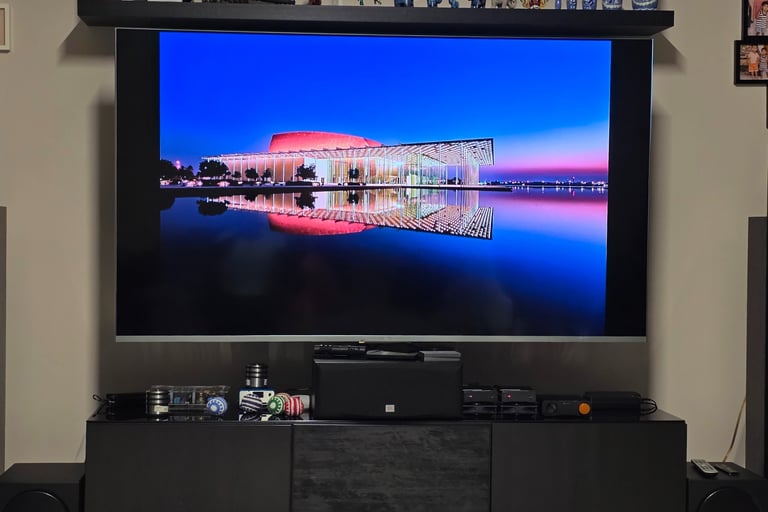
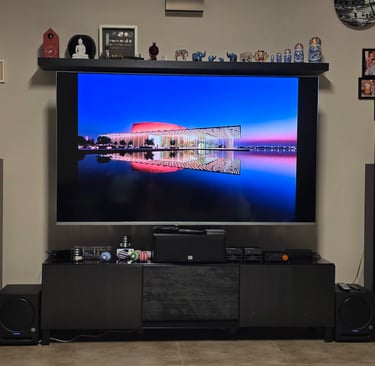
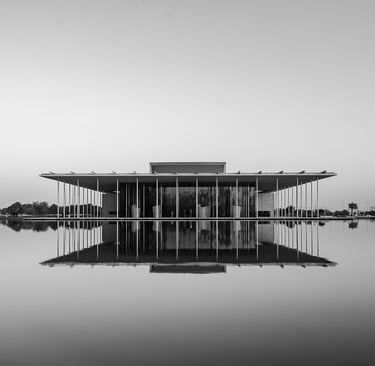
To test the real-world limit, I printed the shot at A4 and, satisfied with the result, pushed it to A3. The outcome was compelling. The 16.2MP files were remarkably crisp, aided significantly by the optical sharpness of the Tokina 11-16mm lens. More importantly, the older sensor rendered the image with a certain "grit" and organic texture—a character often lost to the clinically smooth output of modern, high-resolution sensors. To stretch it more i viewed teh photo on my 75inch TV and below is teh photo of the same taken from 3m away, now you can be teh judge whether 16MP is enoch or not…
Verdict: Still Holds Its Own
Is the Nikon D7000 state-of-the-art? Far from it. Yet, this early morning session proved unequivocally that it remains a serious photographic tool.
The camera didn't just "get the job done"; it made the process itself enjoyable. It compelled me to slow down, commit to a tripod, and trust my settings. The resulting images demonstrate that even in 2026, 16 megapixels and high-quality glass are often all that is needed.
Beyond the output, the shoot reignited a specific discipline: relying on the internal light meter rather than the "what you see is what you get" feedback of a modern EVF. It was a welcome opportunity to hone the fundamental skills required by a DSLR workflow.
In fact, the experience felt so organic that it has rekindled my interest in shooting actual film—a challenge I hope to take up in the near future.
Contact: sibykdxb@gmail.com
Copyright © All rights reserved.