New product launch comming soon...

The Kit Lens Defense: Why the Fuji 18-55mm is a Keeper
The "kit lens" label is usually a warning, but the Fujinon XF 18-55mm f/2.8-4 is the ultimate exception. Discover why this premium, metal-built zoom with built-in OIS is the unsung hero of the Fuji system and the most reliable lens you can put on your X-T3.
2/14/20266 min read
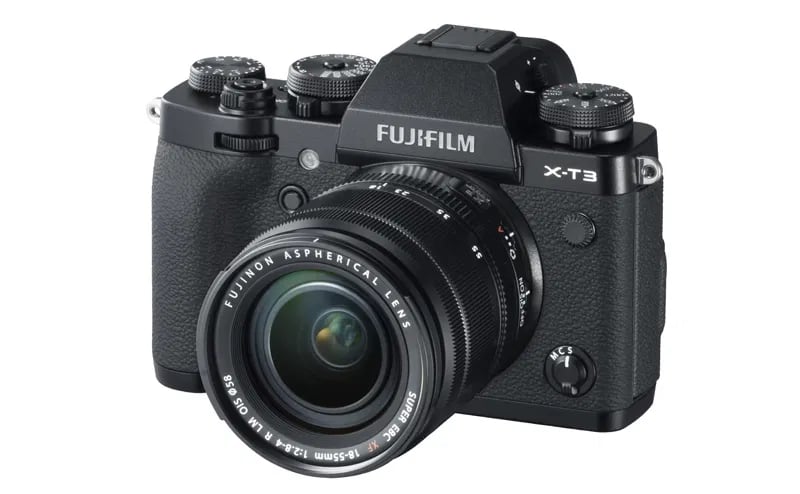
In the photography world, the term "Kit Lens" carries some serious baggage. It’s essentially industry shorthand for the cheapest, least durable piece of glass in a manufacturer's lineup. The name implies cheap plastic barrels, sluggish variable apertures, noisy autofocus motors, and inevitably soft images.
Because of this dismal reputation, the standard advice handed down to almost any new photographer is entirely predictable: "Sell the kit lens immediately and buy a prime." In fact, for years, the prevailing wisdom on forums and from seasoned shooters was to avoid the starter bundle altogether. If a "body only" option was available, you took it, and bought a separate, fast prime lens to ensure you started off on the right foot.
There is, however, one massive exception to this rule. Fujifilm decided to do things differently. Their version of a "kit lens" happens to be the exceptional Fujinon XF 18-55mm f/2.8-4 R LM OIS.
Having shot extensively with a trusty 50mm f/1.8 for years—and absolutely loving the creamy background separation and clinical sharpness that a fast prime provides—I completely understand the prime-lens purist mentality. Yet, despite my deep appreciation for prime lenses, I have a confession to make: that 18-55mm zoom finds its way onto my X-T3 far more often than I’d care to admit.
Here is why this specific piece of glass is the unsung hero of the Fuji system, and why you should hold onto yours.
1. The Aperture Advantage (The Fuji Differentiator)
Take a hard look at the typical standard zoom bundled by almost any other manufacturer. You'll inevitably find a sluggish, frustrating f/3.5-5.6 variable aperture staring back at you. It’s the industry-standard compromise: cheap to produce, but practically useless the moment you zoom in or the sun starts to dip below the horizon.
Fujifilm stands entirely alone here. Their decision to offer an f/2.8-4 aperture range on a bundled lens is, frankly, one of the biggest differentiators in the APS-C market. I’ll admit, this took me completely by surprise. When I made the shift from my trusty Nikon D7000, I was conditioned by years of experience to expect kit lenses to be slow, dark, and limiting.
That f/2.8 aperture at the wide 18mm end is a revelation. It is nearly a full stop faster than the f/3.5 competition, which translates to letting in roughly twice as much light. In real-world shooting, this is massive. It means I can shoot indoor architecture, capture environmental portraits, or keep the camera in my hands at dusk without being forced to crank my ISO into the noisy stratosphere just to maintain a usable shutter speed.
And the advantage doesn't disappear when you punch in. Even when you zoom all the way out to the long end at 55mm, the aperture only drops to f/4—not a dismal f/5.6. An f/4 aperture at 55mm still provides highly pleasing background separation and smooth bokeh, provided you understand your working distances and position yourself reasonably close to your subject. It gives you creative control that most other kit lenses simply strip away from you.
2. It is NOT a "Plastic Fantastic"
Let’s talk about the physical reality of most bundled lenses. When you unbox a typical entry-level DSLR bundle, the included lens often feels like an afterthought. They are usually hollow, creaky plastic tubes with plastic lens mounts that feel like they might snap off if you bump them against a doorframe.
The Fujinon XF 18-55mm is a completely different beast. The moment you pick it up, you realize it’s not a "plastic fantastic." It is built like a tank. The barrel is constructed primarily of metal, giving it a reassuring density and a premium, cold-to-the-touch feel that inspires confidence when you're out shooting.
Then there is the tactile experience. The zoom ring is beautifully damped—smooth and resistant enough to prevent annoying zoom creep when the camera is slung over your shoulder, but fluid enough for precise, rapid framing. Crucially for the Fujifilm shooting experience, it features a dedicated manual aperture ring. Feeling those satisfying mechanical clicks as you dial in your exposure connects you to the photographic process in a way that scrolling a plastic command dial simply doesn't.
It feels like a premium piece of glass because, underneath that metal exterior, it absolutely is one. Fujifilm didn't cut corners on the optical formula. They packed 14 elements into 10 groups, including three aspherical elements and one extra-low dispersion (ED) element. In practical terms, this means the lens ruthlessly controls chromatic aberration and color fringing, even in high-contrast scenes.
The quality of these optics is genuinely top-notch. It easily holds its own in real-world shooting against those massive, heavy, and punishingly expensive f/2.8 constant zooms from other brands—without breaking your back or your bank account. Calling this a "kit lens" is nothing more than a quirk of marketing just because it happens to ship in the same box as the camera body. In reality, it is a high-performance standard zoom that consistently punches way above its weight class.
3. The OIS Factor (Crucial for the X-T3)
Here is the reality check: As much as I love my Fujifilm X-T3—and it is a phenomenal, workhorse of a camera—it has one glaring omission by modern standards: it does not have In-Body Image Stabilization (IBIS).
When you are shooting with an unstabilized prime lens and the sun starts to dip, you are quickly forced into a corner. You either have to crank your ISO until the image degrades into noise, or risk the frustrating reality of motion blur from camera shake.
This is where the 18-55mm completely changes the game. It features Optical Image Stabilization (OIS) built right into the lens, offering a very real, highly effective four stops of compensation. For my workflow, this is massive. It lets me confidently drag my shutter speed down to 1/15th or even 1/10th of a second entirely hand-held. It allows me to capture the natural ambient glow of low-light street scenes, moody interiors, or dusk architecture without the absolute burden of lugging a tripod around everywhere I go.
Now, I am not a video shooter. My focus is entirely on capturing still moments. But it is impossible to ignore the broader value here: if you are a hybrid shooter trying to balance photography and video on a non-IBIS body like the X-T3, this OIS feature alone makes the 18-55mm absolutely indispensable for keeping your footage smooth and usable. For the rest of us shooting stills, it simply means more keepers at the end of the night.
4. Versatility
Primes are fantastic for ultimate image quality. They force you to slow down, compose thoughtfully, and "zoom with your feet." I respect that discipline, but let's be honest: in the real world, primes are often terrible for speed.
The true advantage of this 18-55mm lens absolutely shines through when you are traveling with family. Family trips dictate a completely different pace than a solo photo walk. You don't always have the luxury of making everyone stop and wait while you dig through your camera bag to swap a wide-angle for a portrait lens. You need to be ready for the grand vistas and the spontaneous family moments simultaneously, and this single lens handles both flawlessly.
With the 18-55mm mounted on my X-T3, I can be shooting a sweeping, wide landscape at 18mm, capturing the full scale of a new location. Then, a split-second later, I can twist the barrel to 55mm to catch an intimate, candid portrait of my family before the smile fades and the moment evaporates. You simply cannot do that with a prime.
Furthermore, when you are traveling or shooting in unpredictable, dusty environments, the last thing you want to do is constantly pop the lens off your camera. Changing lenses out in the field is an open invitation for dust and debris to settle right onto your sensor, ruining your shots with spots. By keeping the 18-55mm glued to the body, you get the essential focal lengths you need while keeping the inside of your camera protected from the elements. That kind of versatility isn't just a matter of convenience; it is an absolute lifesaver.
The Verdict
Let’s be honest and put the pixel-peeping to rest: Do premium primes offer technically better edge-to-edge sharpness, micro-contrast, and a shallower depth of field? Yes, absolutely. I am not going to pretend otherwise. If you spend your time photographing test charts or shooting exclusively in controlled environments, a fast prime is always going to win that technical battle.
But photography isn't done on test charts; it happens out in the unpredictable real world. And for Fuji shooters, the XF 18-55mm offers something arguably much more valuable than clinical perfection: absolute Versatility and Reliability.
When you are out on the street, hiking a trail, or trying to keep up with your family on vacation, the best lens isn't the heavy prime sitting at the bottom of your camera bag waiting for the perfect lighting. The best lens is the one that consistently gets the shot. The 18-55mm delivers because attached to your camera it is ready for whatever fleeting scenario unfolds in front of you—from a wide landscape to a tight portrait, all in a fraction of a second.
So, before you fall for the old forum clichés and decide to list yours on the used market just to help fund the latest hyped-up prime, take a step back and think twice. Look at your own image metadata. You might just find that this so-called "kit lens" is actually your most reliable piece of glass. If you let it go, you might end up missing it a whole lot more than you think.
Want to know more? Watch this Video Review by Aperture Atlas
Contact: sibykdxb@gmail.com
Copyright © All rights reserved.